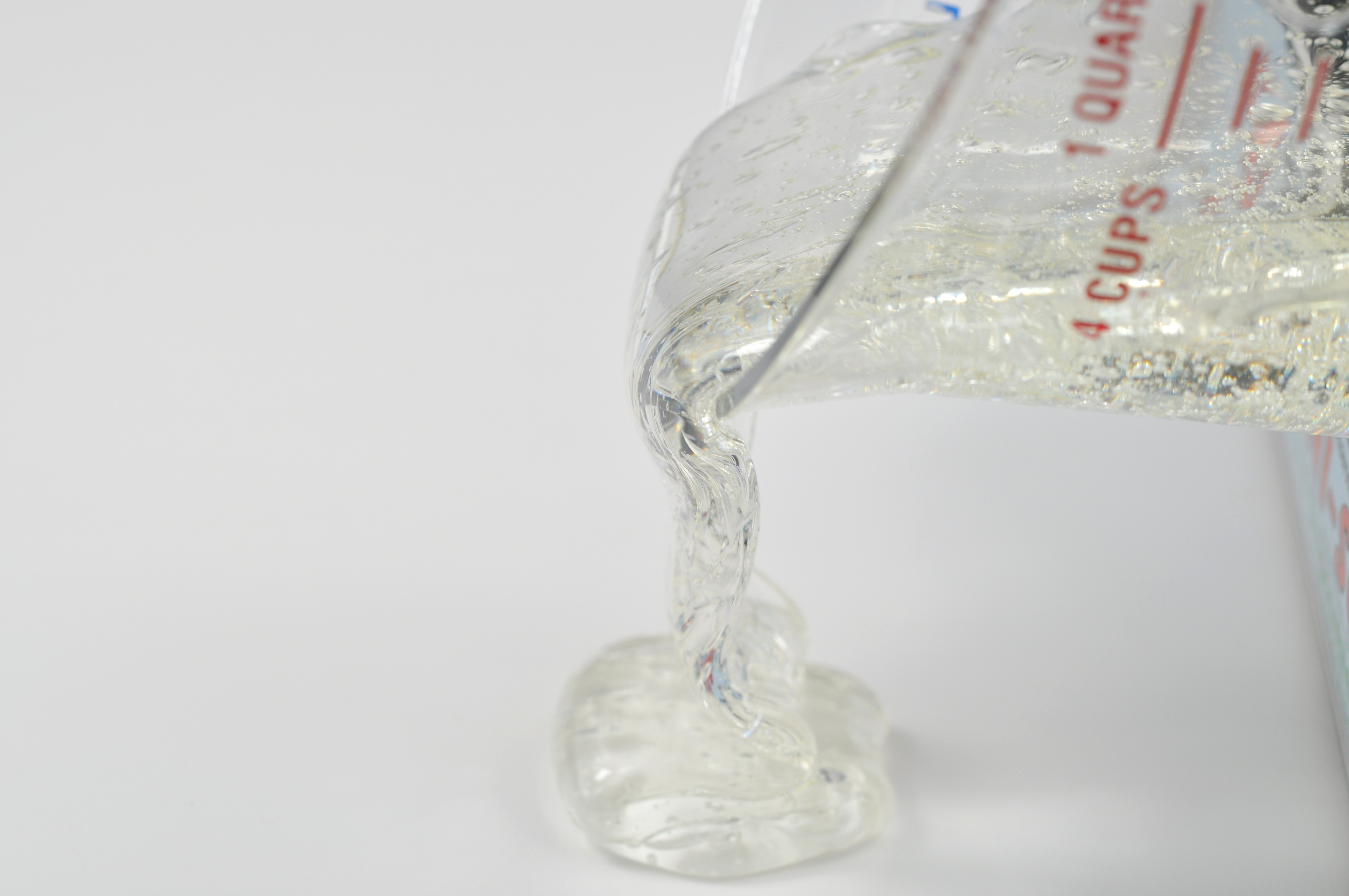
Invert sugar- Invert Syrup- Trimoline
An advantage a professional pastry chef has is that certain key ingredients are readily available. One of these ingredients is invert sugar. Although invert sugar is close in chemical composition to honey, it is not found on most grocery store shelves. The good news is that homemade invert sugar is quickly made by anyone. For countless confectionary or baking applications, a corn syrup substitute or replacement can be invert sugar.
Invert sugar is used extensively in confectionary for preparations such as ganache, jellies, fudge, and taffy and in the preparation of sorbets and ice cream. Its ability for controlling crystallization and creating a smoother mouth feel in these products is the main reason why it is used in the first place. Invert sugar is hygroscopic which leads to a reduction of available water in food preparations, resulting in a longer shelf life of countless products. It lowers the spread of bacteria and basically acts as a preservative. The humectant properties of invert sugar are high and will keep products such as fillings for chocolates and fudge much longer moist and tender. Invert sugar also contributes to the Maillard reaction (caramelizing) and consequently will aid the browning process.
Also utilized in certain baked goods like Madeleine’s and brioche where invert sugar is used to increase tenderness and moistness. For all the above mentioned attributes of invert sugar the one I am most excited about is that invert sugar intensifies aromas, especially in sorbet and certain chocolate ganache applications. With so many desirable attributes in confectionary and baking, the question why use invert sugar, is no longer a mystery.
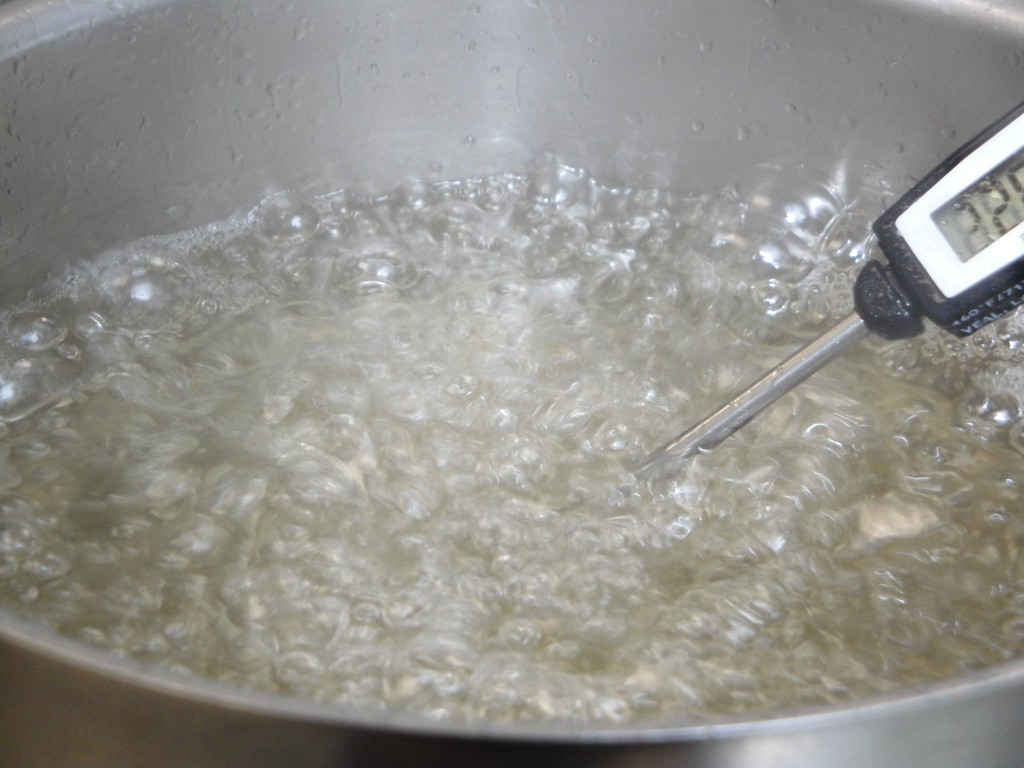
For many years confectioners and pastry chefs have added glucose and or corn syrup into boiled sugar applications to prevent these syrups from crystallizing. In these syrups, substituting corn syrup with invert sugar is something I have done for some time with parallel results.
In confectionary applications such as ganache, invert sugar can be the sole source of sweetener, but in the case of sorbet, gelato, ice cream or cakes only about 5-10% percent of sugar is replaced with invert sugar.
Getting it all together!
Invert sugar has a long shelf life so make a batch and keep it in your refrigerator in a well sealed container for at least 6 months. This way whenever you need to make a pound cake extra moist or control crystallization in gelato or make truffles extra creamy you are set to go!
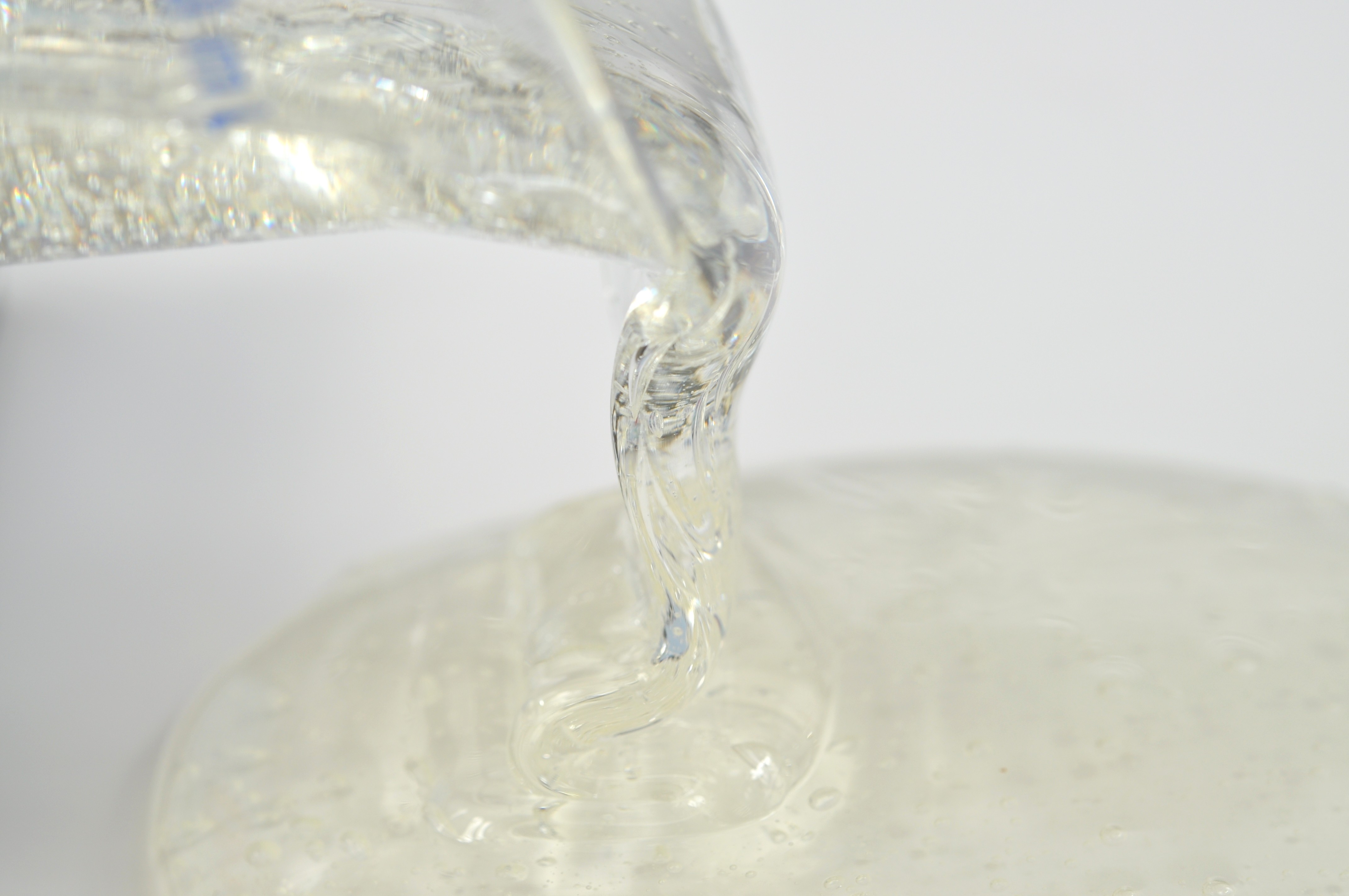
Invert sugar
Yield: 2 lb 3 oz (1 kilo)
| 4 Cups + 6 Tablespoon | (2 lb 3 oz) | Extra fine granulated sugar | 1 kg |
| 2 cups | (16 fl oz) | Water | 480 ml |
| ¼ Teaspoon | ( ¼ tsp) | Cream of tartar or citric acid | 1 g |
- If you have an induction cook top or an electric stove use these options instead of gas. In a non reactive saucepan stir to a boil the sugar, water and cream of tartar (Or citric acid).
- Once the mixture boils wash away any sugar crystals stuck to the side of the pan with pastry brush dipped in water. Any additional water added to the pan from this process, has no effect on the final outcome.
- On medium heat without stirring boil the mixture to 236°F (114°C). Remove from heat and cover the pan. Let cool at room temperature. Store in a refrigerator. Invert sugar will last at least 6 moths.

Hello Eddy,
thank you for the great article. You help to a lot of people to make great and tasty things!
I have several questions:
1. Is it critical to add exactly 1g of citric acid to 1 kg of sugar?
2. In my case the sugar gets to maximum 105C temperature instead of 114C, what may be a problem?
3. When exactly can I stir the sugar in the process? Why it is important not to stir the mixture during the boiling?
thank you,
Avi
I’m not sure about the other things you asked but I do know that once the mixture has reached supersaturation, stirring encourages the sugar particles to clump together again causing crystallization so you will end up with an opaque gritty substance.
I make carmels using 4 cups sugar and 16 oz. corn syrup. I would like to
substitute invert sugar to prevent crystalization. Which ingredient do
I substitute for and in what amount.
Larry, remove the 16 oz corn syrup. Add an additional 8 oz (1 cup) sugar and add 8 oz invert sugar.
Hi Eddy. Thanks for the great recipe! I am trying to make hard candies like lollipops using invert sugar instead of corn syrup. Can I just replace the corn syrup in the recipe for an equal amount of the invert syrup? Thank you!
Hi Eddy.
I followed this recipe exact. What is it meant to look like? Mine looks like sugar syrup. Does it thicken when cooled? Please advise if i have succeeded.
Hi Chef
I was wondering if you, by chance, had a formula for making invert sugar that uses invertase. Any thoughts are appreciated, thanks!
Minas,
I have not done that so I could not comment from experience. I would give it a try. The ingredients are not expensive and you may like the outcome.
My best, Eddy.
Paul,
It will look like glucose.
My best, Eddy.
Hello Chef Eddy. I made this following the recipe exactly, and the mixture resembled liquid glucose when I put it in a sealed container in the fridge. Three weeks later when I checked on it, it had partially crystallised. I hadn’t stirred it, and I hadn’t scraped the pan into the container; I just used the free flowing invert sugar from the centre. What has gone wrong? Is my fridge possibly too cold? Perhaps I wasn’t thorough enough when I brushed the sugar crystals down the side of the pan? Most importantly, is it stll useable, or will it make my fondant – my main application for invert sugar – grainy if I try to use it?
Many thanks for any advice,
Ellie
Eddie, thanks so much I was recently diagnosed with a corn allergy and was looking for a substitute for corn syrup that is used in just about all recipes.
I’m trying to make Creme eggs for Easter and I followed a recipe similar to this one that added liquid glucose and asked to be boiled for 15 minutes at 115 degrees. It didn’t work as the sugar just crystallised and hardened. If I made invert sugar syrup your way, how do I turn that into Creme egg fondant?
I have started substituting golden syrup for corn syrup in my caramel recipe. Works very well and I like the very slight difference in the taste of my final product. I will however caution that in my experience (and let’s face it, no two batches are exactly alike) the golden syrup needs a slightly higher temperature for the consistency that I like. With corn syrup I took my final boil to 242* F whereas the golden syrup caramel needs to go to 244-245*.
Think I’ll try this home made invert sugar recipe next time as golden syrup isn’t as readily available as I’d like. Thanks for the idea! Cause I needed an excuse to make a batch of caramel…..
Hi Chef Eddy,
It took me 3 goes to get this right. The first two attempts crystallised very quickly and I’m still trying to get the last one out of its jar – it set like concrete! I read all of the comments here and put all the advice together and came up with a solution that works for me. I used a heat just less than medium right through the process and did not stir at all except right at the beginning to mix the ingredients. I see a lot of comments about the temperature not getting high enough – just have patience, as the liquid boils off, the temperature will climb slowly and will get to 236F eventually. Don’t increase the heat or it will caramelize. Voila! Perfect invert sugar!
I use this in almost every recipe now and my cakes are more moist and keep much longer than ever before. Many thanks for your generous sharing of your skills Chef.
Chef Eddy,
Thank you for the time you spend on this website. I have learned so much, and as a person from the U.S. find it especially interesting to learn from someone with a European background. I successfuly made the invert sugar but cannot figure out a formula for replacing corn syrup in all candy recipes. Partly because the water content is different (but perhaps doesn’t matter?) and partly because of sweetness difference. For example, what quantities do I change here: 2 C granulated sugar, 1C brown sugar, 2/3 C corn syrup in a recipe for carmel to dip apples which also has 1 C evaporated milk and a bit of butter.
Hi Eddy
I would like to increase the recipe using 25kgs granulated sugar. How do the other ingredients increase?
Thanks
Liz
Liz, exactly the same. In fact, you will have better results as small batches are more difficult to get it right.
Eddy.
Hi Chef,
I recently purchased a quite expensive and advanced patisserie book. In it is a recipe for a caramel cake in which you use 250g sug, make a caramel and deglaze with 300 of butter to form a chewy caramel then adding 50 of invert sugar(trimoline he uses), this is then supposed to be cooled to 20/25 deg before being whipped and adding eggs and flours to make a cake.
Problem – until now (with your recipe) i havent had access to invert sugar so i tried glucose. Caramel was WAY to hard to whip, any warmer and the butter seperated
Will the invert sugar allow the caramel to be soft enough to whip at 20-25deg?
This will be my third attempt and I dont want to waste any more ingredients.
Please help!
Brian, I am afraid that using invert sugar instead of glucose will not do the trick either. Glucose and invert sugar are rather similar in viscosity and using such as small amount will pretty much give you the same results. If you wanted to give this recipe another go, I would try to add a little water, orange juice or milk to the 20-25 degree caramel. Just enough so you can whip it. Other than that there is nothing that comes to mind in other forms of repair. If I do, I will send them to you. Good luck with this.
Eddy.
I am making Belgian truffles and found “Liquid Sugar In The Raw” at the store, would this be considered invert sugar? Or if I use corn syrup instead of invert sugar would the amount be the same?
Hello Eddy,
I would love to offer my customers some selfmade Speculoos here in Chicago! Unfortunately I cannot get any Cassonnade! Apart from this very important ingredient, I have all the others.
What would you suggest I replace the Cassonnade with? Mollasses + Brown Sugar?
Thanks
Renaud
Hello Renaud,
Using dark brown sugar may be enough to get it right. It is what I do and I am very happy with the results. However, your idea of adding molasses in addition to brown sugar is clever.
My best, Eddy.
hi Eddy,
i’m making rolled fondant and i want to know if i can use glycerin as well as the invert sugar syrup and what quantities would i need per kilo, if possible thank you, :o) xxx
Hi chef I need to keep my cookies and muffins moisture for a longer period and can I replace sugar with your invert sugar recipe and if so what % can be replaced? Thx ruwan
Thanks so much chef. why would my finished product have a thin layer of crystal on top? while coming down to room temp.
Hi chef Eddy.
My question is “do you think the homemade invert sugar is better than Trimoline? Are they different? Cause I have been using trimoline to avoid crystalizarion on a high sugar content candy and I am not getting the result that I wish. I was wondering if the invert sugar of the recipe above could be a better one….
Trimoline will work just as well as invert sugar. They are basically the same.
Perhaps from cooking it slightly longer than indicated.
Thank you chef for this recipe for such an essential ingredient in baking. I do not buy corn syrup and have avoided many recipes that call for it. Now, I have a great substitute for honey as well.
Hi Chef Eddy, Im making mint ganache and i did not have invert sugar. i went online to check for a recipe and voila! there you were : ) I followed your recipe and Im just waiting on it to cool to room temperature. Thank you for being the best! Margaret Flores : )