Fondant
There several types of fondant used in a pastry shop.
- Pastry also known as poured fondant.
- Confectionery or confiserie fondant. (Can also be used as poured fondant)
- Rolled fondant.
Pastry and confectionery fondant are nearly identical when observed with the naked eye and for many uses they are interchangeable. The main difference is that confectionary fondant is prepared using cream of tartar and pastry fondant is not. Cream of tartar produces a fondant which is ideal to use when tender interiors of chocolates are desired. The function of cream of tartar is to partially invert the sugar syrup, this will prevent the fondant to become very hard. If too much cream of tartar is used the fondant will be very soft, even runny.
Confectionery fondant may be prepared with glucose or corn syrup but it can successfully be made without. Provided the proper cooking technique is observed and care is made, to use sugar, with has no traces of impurities which will crystallize the syrup. Corn syrup or glucose is used in fondant to prevent unwanted crystallization and aid the inverting process. (Pastry fondant is usually prepared with a higher amount of glucose if compared to confectionery fondant.) However a growing amount of the population refuses to consume products containing corn syrup. Certainly fondant is a crystallized sugar mass but it needs to be crystallized at the right time to obtain a smooth and perfect fondant.
This type of confectionery fondant can be used for many applications. Tint it green with Matcha (green tea powder) and use it for coating a Matcha flavored cream filled éclair. For a traditional éclair mix pure melted cocoa mass with fondant to obtain chocolate fondant. Fondant can also be used to coat the surface of a mille-feuille (Napoleon), petit fours and is extensively used in the world of confectionery and artisan chocolates.
Most pastry chefs and artisan chocolate makers purchase fondant for convenience but it is not very difficult or expensive to make.
Getting it all together!
When well wrapped, fondant can be made weeks in advance. It certainly is best to prepare fondant 24 hours in advance. This will allow the fondant to fully develop or ripen. Ensure you are working with granulated sugar free of any foreign substance and measure the water in a container free of lint. Using electric, especially induction to boil this type of sugar syrup is 100% better than gas. In dimmed light it is very easy to see gas flames going up the sides of the pan. This results in uneven heating, something which is very highly unwanted when making fondant. Cooking the syrup on low heat prevents uneven heating, but in return will create crystallization during the cooking process. Like most syrups, fondant has to be cooked on high heat to prevent sugar crystals from forming in the pan.
It certainly is possible to use a marble slab to pour the syrup on and then to crystallize it, but a food processor makes this super easy.
Confectionery Fondant recipe
Yield: 2 lb 1 oz (1 kg)
| 4 Cups | (2 lb) | Extra fine granulated sugar | 980 g |
| 1Cup | (8 oz) | Water | 240 g |
| ¼ teaspoon | ( ¼ tsp) | Cream of tartar | 1 g |
| 1/3 Cup | (4 oz) | (Optional) Corn syrup or glucose | 120 g |
Fondant food processor method:
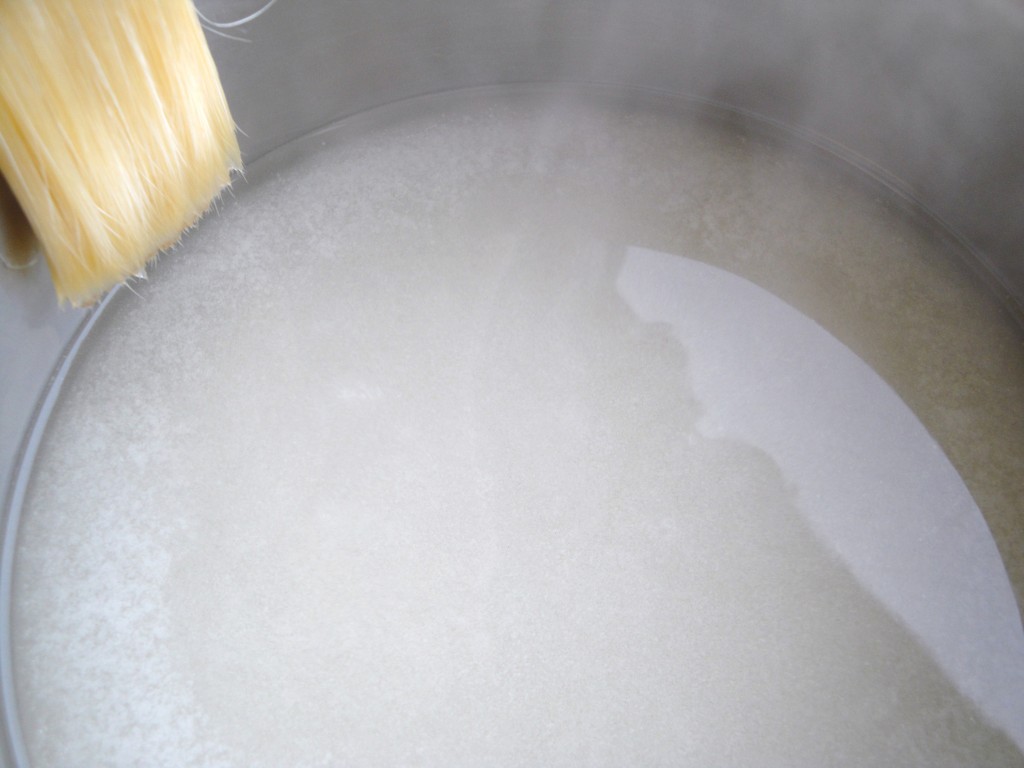
- In a saucepan combine the sugar and water and stir to a boil. Once the mixture boils wash the sides of the pan with a pastry brush dipped in water to remove any sugar crystals. Any additional water adding in this process has no effect on the final outcome.
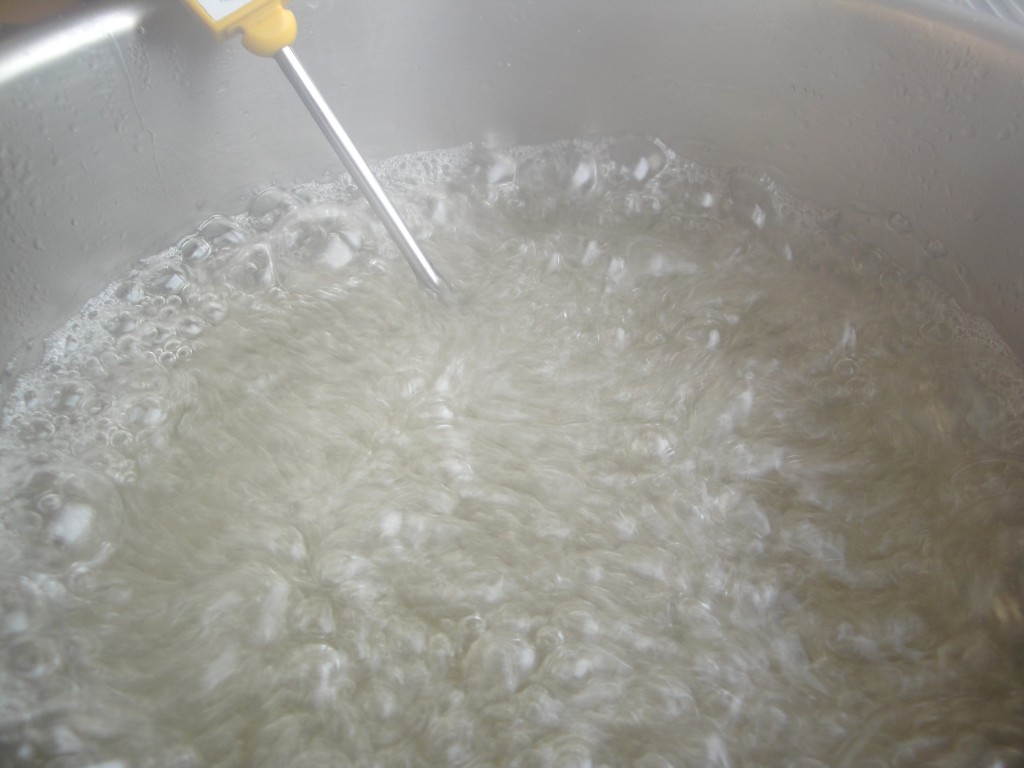
- Boil further without stirring! At 223°F (106°C) add the cream of tartar mixed smooth in 2 Tbsp (1 oz) – (30 ml) water. Add the corn syrup or glucose if using as well. No need to stir the mixture!
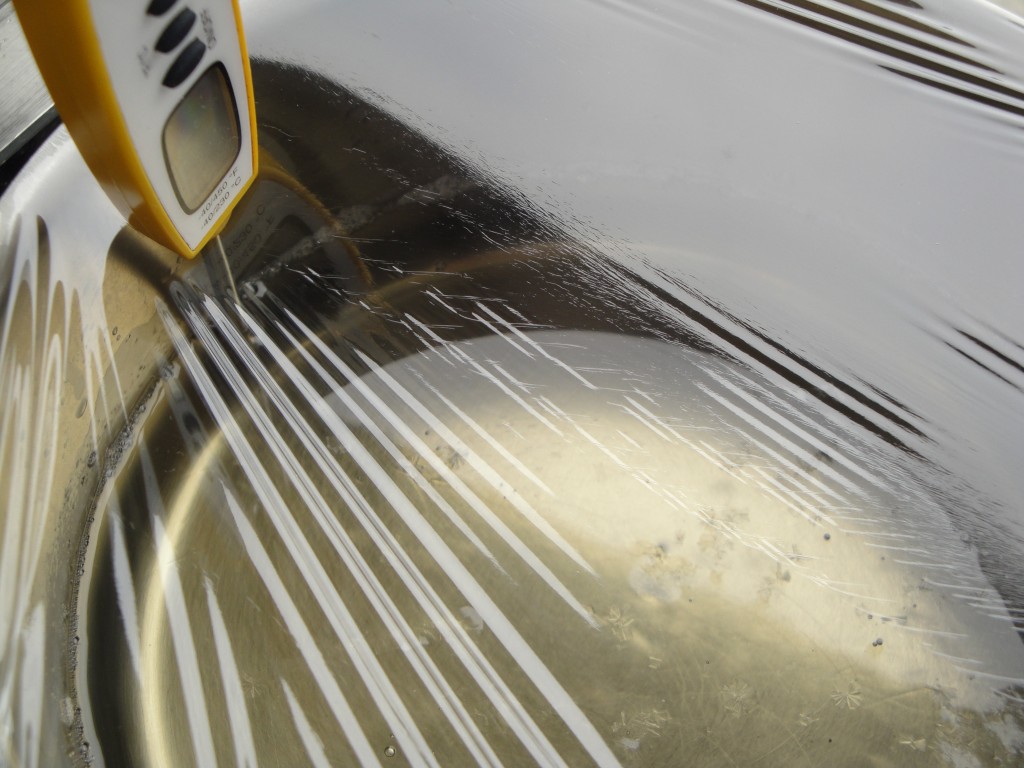
- Boil without stirring to 242°F (116.5°C). Remove from heat and cover with plastic food film. Let cool to 120°F (50°C).
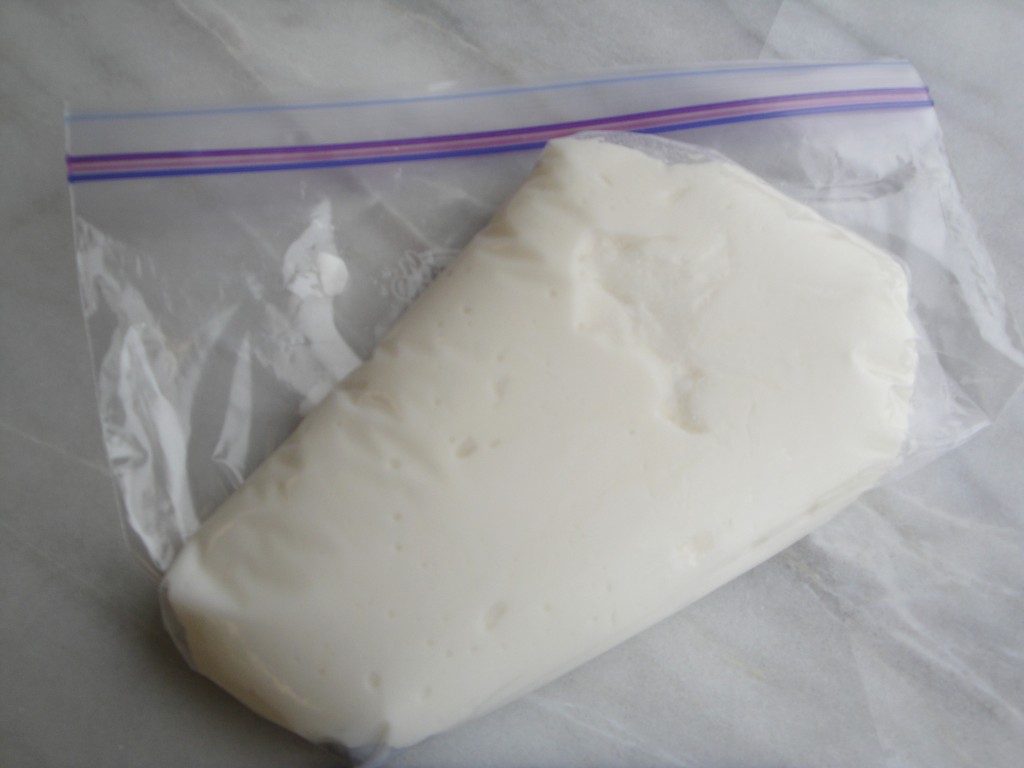
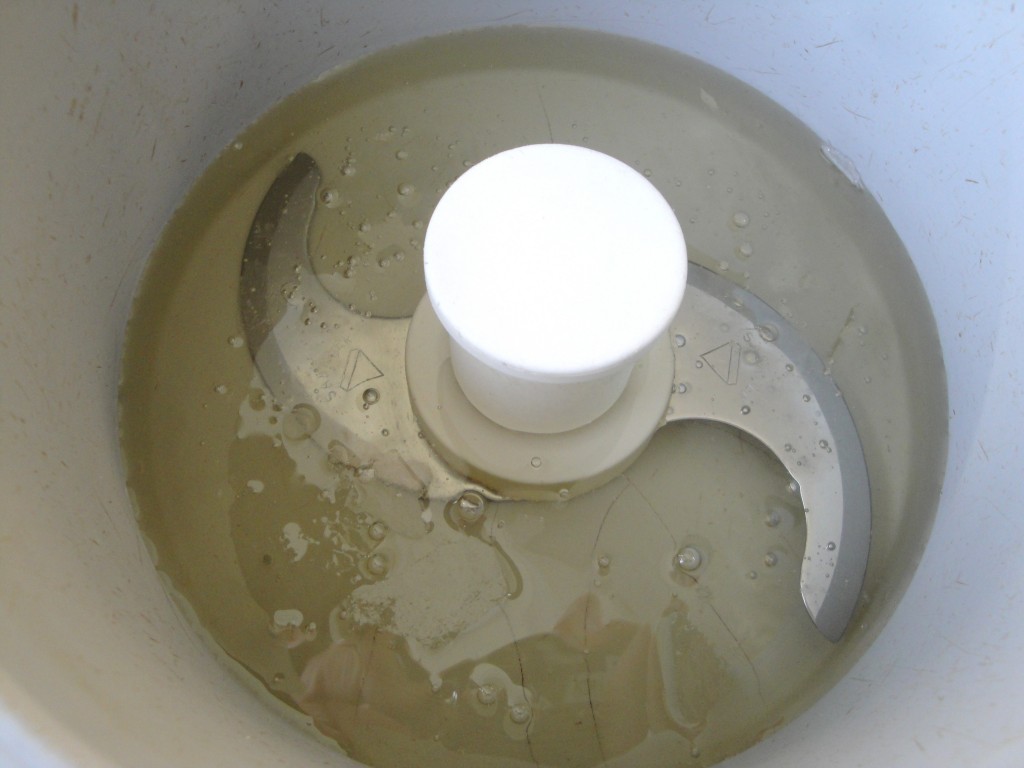
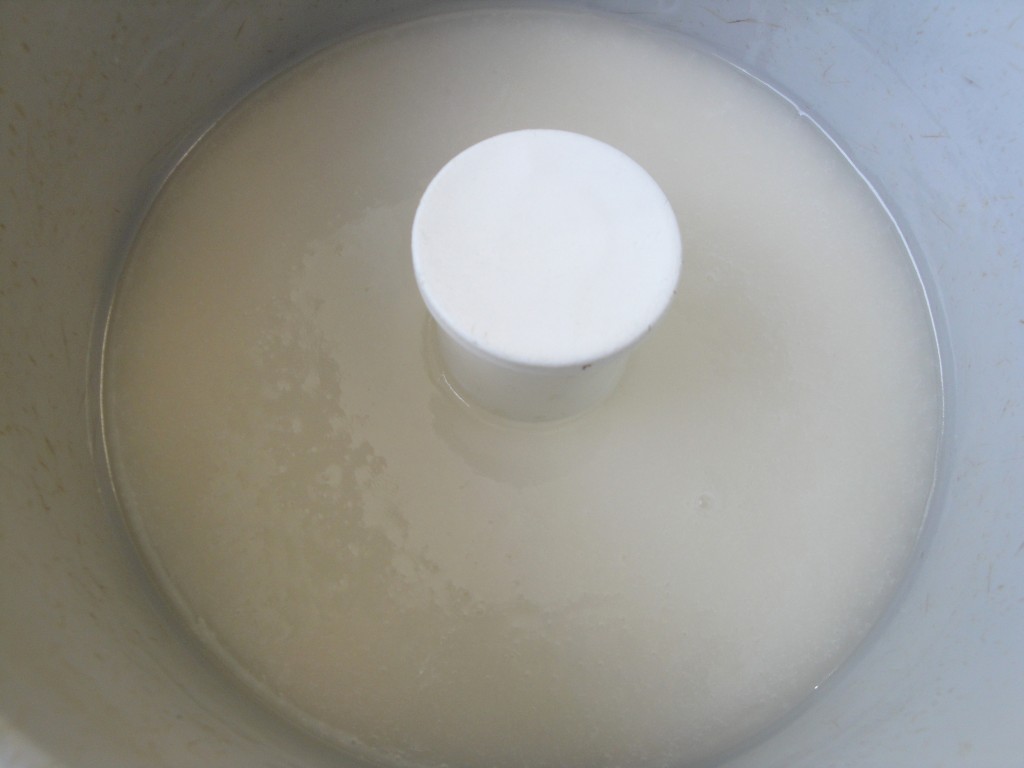
- Pour and scrape the mixture into a food processor and mix briefly until it turns solid white. Pour in a firm plastic bag and seal well.
Fondant marble slab method:
- In a saucepan combine the sugar and water and stir to a boil. Once the mixture boils wash the sides of the pan with a pastry brush dipped in water to remove any sugar crystals. Any additional water adding in this process has no effect on the final outcome.
- Boil further without stirring! At 223°F (106°C) add the cream of tartar mixed smooth in 2 Tbsp (1 oz) – (30 ml) water. Add the corn syrup or glucose if using as well. No need to stir the mixture!
- Boil without stirring to 242°F (116.5°C). Remove from heat and pour between candy rulers on a marble slab sprinkled with water. Sprinkle the surface with additional water to prevent a skin from developing. Let cool to 120°F (50°C).
Using a scraper scrape the fondant from the sides into the center and work the fondant until it

Very cool! What a great introduction to using fondant! I had no idea it had uses beyond covering a cake… I learned something new today! ;0) Thanks, Chef!
Chef Eddy, can you also tell me how to prepare mochs paste at home?
Thanking you
sudha
It is so awesome to have this recipe and information. I appreciate having the option of making the confectionery fondant rather than purchasing it as I get great satisfaction from being able to control the quality and quantity of the ingredients I use. Also, appreciate your detailed information so that I can really understand the processes necessary to obtain a good product.
Would be interested in a recipe for poured fondant. To revise this recipe I would remove the cream of tartar and add how much additional glucose or invert sugar to make the same quantity of fondant?
Thank you,
Karen
The fondant is very expensive than the marizpan. But I can use it for any type of product… Cool item…
Question on the sugar, I can only find “FINE” granulars not “extra fine” Unless I go to confectionary sugar which is an Ultra fine POWDER. Can either of these be used? If so do I use the same quantities? Sorry for such a lame question.
Dear Chef: I am trying to make some fondant without much luck. Can you please give me some advice? I tried to make it like the food processor method. I followed the instructions precisely, steps 1 through 4.
My sugar turned brown once it cooled to 120 degrees. Then I could not hardly get it out of the pan. It just dried into a hard, brown mass.
Can you tell me what I possibly did wrong? I made sure that I used a pastry brush to wash down the crystallized sugar on the sides of the pan.
Some observations:
1. When I have the thermometer in the pan, is it suppose to touch the bottom of the pan? or is it just to be in the syrup without touching the bottom of the pan? When it’s not touching the bottom of the pan, I find that I can not bring the sugar up to the required temperature without it burning and turning really brown.
2. When brushing the sugar crystals from the sides of the pan. Do I put the brush totally in the boiling sugar wiping the sides or do I just brush the sides of the pan at the surface line of the boiling sugar? I use cold water in a bowl and rinse out the brush each time.
Thank you. Mandy
I am now able to make fondant. I kept working at it. I live in high altitude and had to adjust my recipe. ~Mandy
Mandy,
There has been an issue with the reply I have been sending…. they were not sent out. So sorry about not replying to you.
Eddy
I would like to color and flavor the fondant. When should I add these ingedients? Thanks for your advice!
Can I use cream of tatar in place of tylose powder to stiffen my rolled fondant?
Hi – How do I make fondant into pouring fondant in order to seal liqueur chocolates?
I already make this fondant with my group in cake decorating class with Chef Becky. It taste good but texture was bad. I tried put on my cake and it fell apart. I think we did wrong process on fondant. Fondant is most popular people will order cake with. Thank you for recipe.
i never knew there were more than one type of fondant. It is really interesting that this is the fact.
I work with fondant quite frequently and I alway buy the fondant in the 5lb- 10lb tubs- It can get very expensive. I will defiantly follow this recipe soon! Thanks Chef
Chef Eddy,
Cakes with fondant are always a disappointment to me, and I didn’t think I’d ever use fondant until reading on your site the many uses fondant has in pastry and candy making. I plan to try your recipe for chocolate mints which includes fondant to make the mint centers.
The articles on your site are classes in themselves, I understand why you gave us the assignment to read articles and recipes from your site, John
Dear Chef Eddy et Bonjour Chef
I would be interested in a recipe for rolled fondant. Est-ce que vous avez une?
Avec meilleur salutation de la Susisse.
Natascha
Chef,
Can’t wait to make the fondant with marshmallows that we talked about in class. When I told my boyfriend he was super excited he loves marshmallows.
Tilly
I just had to comment that if you’re going to go the food processor route, make sure you have a good quality, powerful food processor! My poor Cuisinart Pro Classic was not up to the task and started smoking and shut itself off when I tried to complete the final step. I ended up reverting to the marble slab approach (on a cookie sheet since I don’t have any marble slabs lying about).
Hello, Chef Eddy
The recipe worked perfectly. I used a cheap supermarket food processor and it was absolutely fine – lissom, snowy white fondant produced in about 20 seconds. I mis-read my thermometer though and whizzed it at nearer 60 degrees C, not 50, which meant it was quite hot and liquid when I began processing it. I also halved the quantities, so maybe taking the two together, there was less strain on the motor. Perhaps Essam might want to try that. Looking forward to using the fondant now. Cherry liqueurs, fondant fancies (popular here in England in this Diamond Jubilee year), peppermint creams, all await…..
Chef,
I am new to cooked fondant. Once this has been cooled and has “rested” can I pour it onto the counter and work starch into it and turn it into a rolled fondant?
I tried this yesterday. Ingredients the same, but elevation 6000 ft. So I boiled until 230 F. Then I cooled as written outside on the porch. I added some clear vanilla flavoring at that time. I poured/spooned the sticky mass into a KitchenAid mixer with dough hook (no food processor) and ran it at level 6. First it turned grey and stayed sticky. I turned it off and stirred the sides a couple of times. After about ten minutes, I had just turned away to wash a dish, it suddenly turned snow white and not sticky. I scooped it into a zip lock bag and flattened it. Refrigerated. That evening I tested a small piece and it seems to knead and roll. I will try using it today. I am very impressed.
Hi there i got foundant patisserie .. how do turn it to foundant icing to put on top of my cake .. to make it hard ? Thanks
I’ve only seen people on YouTube make fondant with marshmallows and they make it seem so very complicated! I’ve boiled sugar with no problem before so this should be too hard to do. Can’t wait to try and color as needed.
Chef Eddy, you saved the day once again 🙂
I have three questions:
I want to use this to pour over cookies and then decorate.
Can you mix this in a stand mixer? I have a Kitchenaid mixer.
Can you freeze fondant?
Can you use sugar that is standard size (not fine)?
What is the reason for the cream of tartar?
Thank you,
Carol Young